The Anglo-Saxon Archaeology Blog is concerned with news reports featuring Anglo-Saxon period archaeology. If you wish to see news reports for general European archaeology, please go to The Archaeology of Europe Weblog.
Tuesday, 25 June 2013
The Sutton Hoo Online Exhibition
In 1939, just before the outbreak of the Second World War, an archaeologist named Basil Brown excavated the largest of 18 burial mounds in the grounds of a country house at Sutton Hoo in the east of England. What he discovered turned out to be a spectacular undisturbed burial.
Placed inside a vast ship, were the extraordinarily rich belongings of a high-ranking Anglo-Saxon man, possibly even a king...
View the online exhibition...
From Sutton Hoo to the soccer pitch: culture with a click
Museums, libraries and galleries are a tourist staple of the summer holiday season. Often they’re the first place we head to when visiting a new city or town in order to learn about the heritage of that country. Though only a lucky few have the chance to travel to see these treasures first-hand, the Internet is helping to bring access to culture even when you can’t visit in person.
At the Google Cultural Institute, we’ve been busy working with our partners to add a range of new online exhibitions to our existing collection. With more than 6 million photos, videos and documents, the diversity and range of subject matter is large—a reflection of the fact that culture means different things to different people. What the exhibitions have in common is that they tell stories; objects are one thing but it’s the people and places they link to that make them fascinating.
The British Museum is the U.K.’s most popular visitor attraction and the 4th most visited museum in the world. It’s well known for housing one of the most spectacular archaeological discoveries ever made—the 1,400 year old Anglo-Saxon burial from Sutton Hoo, untouched until its discovery in 1939. Their online exhibition “Sutton Hoo: Anglo-Saxon ship burial” explores the discovery of the ship, featuring videos of the excavation and photos of the iconic helmet and a solid gold belt buckle. All this tells the story of how the burial and its contents changed our understanding of what Anglo-Saxon society was like.
Read the rest of this article...
Sunday, 2 June 2013
HaNoA - Häfen im Nordatlantik

Der Hafen von Búðasandur, Hvalfjörður, Island. Die Überreste eines Handelsplatzes befinden sich in der Bildmitte, das mittelalterliche Hafengebiet (rechts) ist heute versandet (Foto N. Mehler).
Fast alle bedeutenden mittelalterlichen Häfen des nordeuropäischen Festlandes waren Teil größerer Siedlungen, aus denen sich häufig Städte entwickelten. Viele dieser Häfen hatten spezielle Einrichtungen wie z. B. Kaianlangen, Landebrücken und Lagerhallen, die einen gut entwickelten und organisierten Schiffsbetrieb und Warenumschlag ermöglichten. Völlig anders ist die Situation im Nordatlantikraum zu dieser Zeit. Im marginalen Siedlungsgebiet von Island, Grönland, Shetland und den Färöer Inseln gab es in der Wikingerzeit und im Mittelalter keine Städte.
Read the rest of this article...
Tuesday, 14 May 2013
High-tech dig finds Roman farmstead
A high-tech research park is going to be built on land that once housed a Roman farmstead. An archaeological dig on the site of what will become the Haverhill Research Park has revealed traces of activity from the Iron Age through to the 1840s.
![]() |
| James Newboult said the size of the dig helped reveal the site's extensive history [Credit: BBC] |
Headland Archaeology said the dig had provided a "really interesting window" into Haverhill's history. The research park is being built on the A1307, the main road to Cambridge from Haverhill, and will also include a hotel and housing.
Read the rest of this article...
Friday, 26 April 2013
Online Courses in Archaeology
University of Oxford Online Courses in Archaeology
Cave paintings, castles and pyramids, Neanderthals, Romans and Vikings - archaeology is about the excitement of discovery, finding out about our ancestors, exploring landscape through time, piecing together puzzles of the past from material remains.
These courses enable you to experience all this through online archaeological resources based on primary evidence from excavations and artefacts and from complex scientific processes and current thinking. Together with guided reading, discussion and activities you can experience how archaeologists work today to increase our knowledge of people and societies from the past.
The following courses are available:
Sunday, 21 April 2013
The Battle of Fulford: War breaks out over 'forgotten' Yorkshire battlefield
Local historians say it's the site of the curtain-raiser to Hastings in 1066. The council wants to build hundreds of houses on it

Combatants are squaring up to do battle over the fate of a Yorkshire field more than 1,000 years after they say an earlier battle was fought there that helped to change the course of British history. Rival groups have issued a call to arms over the future of what some historians claim is the true site of the "forgotten" Battle of Fulford in September 1066. Local historians are fighting a rearguard action over developers' plans to build 600 homes on a field near York which they say is the site of the historic battle.
The Battle of Fulford is where an invading Viking army defeated an Anglo-Saxon force led by the northern earls, Edwin and Morcar. Historians say the battle is important because the defeat forced the Anglo-Saxon king, Harold Godwinson, to march his army north to fight and defeat the invaders at the Battle of Stamford Bridge five days later. Although victorious, Harold's forces suffered losses at Stamford Bridge and were exhausted after the march, and the campaign in the north diverted the king's attention away from the south coast, where William of Normandy launched his invasion.
Read the rest of this article...
Monday, 15 April 2013
Northampton Castle dig reveals Saxon past
A "rare" Saxon brooch, a medieval harness, pottery and animal bones are among items found by archaeologists at Northampton's medieval castle site.A survey of the land is taking place ahead of work to build a new £20m railway station in the town.
![]() |
| Excavation work in Northampton [Credit: ITV News Anglia] |
Archaeologists are expected to remain at the site on Black Lion Hill for eight weeks before West Northamptonshire Development Corporation (WNDC) can begin work on the first phase of the new station.
Read the rest of this article...
Friday, 12 April 2013
Northampton Castle dig reveals Saxon past
A "rare" Saxon brooch, a medieval harness, pottery and animal bones are among items found by archaeologists at Northampton's medieval castle site.A survey of the land is taking place ahead of work to build a new £20m railway station in the town.
![]() |
| Excavation work in Northampton [Credit: ITV News Anglia] |
Archaeologists are expected to remain at the site on Black Lion Hill for eight weeks before West Northamptonshire Development Corporation (WNDC) can begin work on the first phase of the new station.
Read the rest of this article...
Sunday, 7 April 2013
Unmarked grave dug up in hunt for England's King Alfred the Great
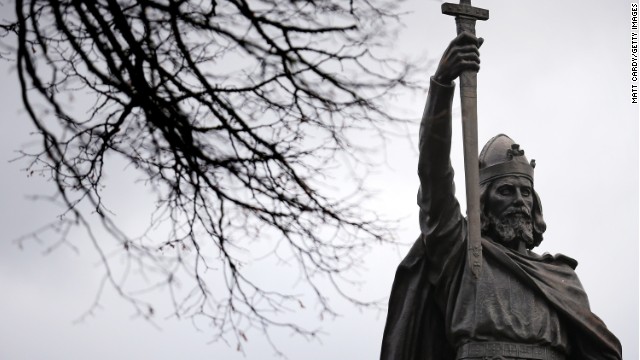
Archaeologists dug up an unmarked grave in a quiet English churchyard in search of remains of King Alfred the Great, a ninth century monarch credited with fending off the Vikings.
The exhumation was apparently triggered by fears that interest over the recent discovery of the skeleton of Richard III could lead grave robbers to dig the area for his bones.
Alfred the Great is known to generations of schoolchildren through a popular legend that tells of his scolding by a peasant woman for letting her cakes burn while he watched over them.
He was at the time preoccupied with the problem of how to repel the Danes, who had captured swaths of Anglo-Saxon England.
Read the rest of this article...
Saturday, 23 March 2013
Online Viking Course
Vikings: Raiders, Traders and Settlers
University of Oxford Online and Distance Learning
8 May to 21 July 2013
Ravagers, despoilers, pagans, heathens - the Vikings are usually regarded as bloodthirsty seafaring pirates, whose impact on Europe was one of fear and terror. As they plundered the British Isles and the north Atlantic, these pagan invaders were seen by their Christian victims as a visitation from God.
Yet the Vikings were also traders, settlers and farmers with a highly developed artistic culture and legal system. Their network of trade routes stretching from Greenland to Byzantium and their settlements, resulted in the creation of the Duchy of Normandy in France, the foundation of the Kingdom of Russia in Kiev and Novgorod as well as the development of Irish towns including Cork, Dublin and Limerick.
This course will use recent findings from archaeology together with documentary records, to examine these varied aspects of the Viking world and to give a detailed and balanced view of this fascinating period.
A wide variety of online resources including Google Maps and Google Earth as well as specific Viking web pages, are used in conjunction with text books and specially designed online interactive media to create an exciting insight into the world of the Vikings.
Further details...
Friday, 15 March 2013
Staffordshire hoard of treasures to be displayed in Birmingham gallery
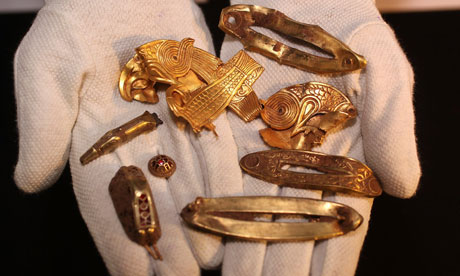
The Staffordshire hoard, the UK's largest collection of Anglo Saxon treasure, includes sword mounts and fragments of processional crosses. Photograph: Getty Images
The museum in Birmingham where thousands queued for hours to seethe Staffordshire hoard of Anglo Saxon gold is to create a gallery to display some of the most spectacular pieces, helped by a £705,000 grant from the heritage lottery fund.
"The Staffordshire hoard is our Tutankhamun," Simon Cane, director of the Birmingham Museums Trust said.
In 2009 a nondescript field near Lichfield, of no known historical interest, yielded one of the most spectacular hoards of Anglo Saxon gold ever found.
Read the rest of this article...
Bronze Age settlement unearthed in SW England
Wick Barrow beakers [Credit: Somerset County Council]
Excavations at the Hinkley C site have revealed the remains of a 3,000-year-old Bronze Age settlement.
Archaeologists have also discovered the first Saxon grub hut to be found in Somerset, and a number of Roman features and artefacts, including a grain drier, quern stones, a stone anchor, fishing net weights, jewellery and graves.
The work was funded by EDF Energy as part of its site preparations and carried out by Somerset County Council.
Read the rest of this article...
Monday, 25 February 2013
Exhibition preview: Capital of the North, Yorkshire Museum, York
© Gareth Buddo
"From the fifth century, for 1,000 years, York was the northern city,” says Natalie McCaul, the curator of archaeology at the museum doing this history justice several centuries later.
“It was the place from which the powerful ruled. Kings ruled the country from here. Archbishops led the church from here.
“Traders and merchants made fortunes. This exhibition will look at how York became so powerful, and the men and women who made it that way.”
Started with a film triggered by a coloured bookmark – one for adults, one for kids – this chronological run-through is divided into eight periods.
They include Anglian and Viking throwbacks, the House of York and the Tudor ages, symbolised by glitzy objects such as theEsrick Ring and theMiddleham Jewel, and depicting the likes of Richard III, Henry IV and William the Conqueror in cartoon form.
Read the rest of this article...
They include Anglian and Viking throwbacks, the House of York and the Tudor ages, symbolised by glitzy objects such as theEsrick Ring and theMiddleham Jewel, and depicting the likes of Richard III, Henry IV and William the Conqueror in cartoon form.
Read the rest of this article...
How a distaste for 'pagan food' first put the British off horsemeat
The paper does not attempt to explain how the fashion for eating horsemeat re-emerged in other European countries, notably France Photo: Alamy
A new study of the eating habits of the Anglo Saxons suggests that they may have developed a strong distaste for horsemeat because they saw it as a “pagan” food.
The findings, published in the Oxford Journal of Archaeology, could help explain the level of revulsion at the recent revelations that consumers have been eating horsemeat uwittingly.
Evidence from animal bones found at settlement sites across England shows that horses appear to have been eaten on special occasions in the early Anglo Saxon period.
But as Christianity was gradually reintroduced to Britain between the Sixth and Eighth Centuries the custom became increasingly rare.
Read the rest of this article...
Monday, 18 February 2013
Mick Aston Interview
Mick Aston, formerly of television’s Time Team, answers questions submitted by Oxbow Books and David Brown Book Company customers. Candid, witty and refreshingly honest, Mick offers his personal thoughts on the current state of archaeological research in Britain, the relationship between archaeologists and metal detectorists and much more. He provides fascinating insights into his research project in Shapwick, Somerset and offers advice for others hoping to embark on similar projects in the future.
Watch the video...
ARCHI The Archaeological Sites Index
ARCHI, the online searchable archaeological database, has added a new feature that allows users to add sites to their world-wide database.
The online form is easy to use and should prove to be an extremely useful addition to this site.
You can find the online form at:
Sunday, 17 February 2013
Archaeology Summer Courses at Oxford
The Oxford Experience is offering a number of archaeology courses this summer.
Each course lasts for one week and participants stay in the 16th century college of Christ Church.
The courses offered are:
Cathedrals of Britain by James Bond
An Introduction to Archaeology by David Beard
The Black Death by Trevor Rowley (course full)
Bishop Odo and the Bayeux Tapestry by Trevor Rowley
Colleges of Oxford by Julian Munby
The Architecture and Archaeology of Medieval Churches by David Beard (course full)
Cotswold Towns by Trevor Rowley
Treasures of the British Museum by Michael Duigan (course full)
Churches of England by Kate Tiller
Treasures of the Ashmolean Museum by Gail Bent
The Age of Stonehenge by Scott McCracken
The World of the Vikings by David Beard
Saturday, 16 February 2013
EMAS Easter Study Tour to Yorkshire
There are still a few places available on the Easter archaeological study tour to Yorkshire.
The Study Tour is organized by EMAS, the University of London Extra-Mural Archaeological Society, and is open to any one.
You can find further details here...
Friday, 8 February 2013
Remarkable new finds below York Minster
ARCHAEOLOGISTS have found evidence of a previously-unknown settlement below York Minster, dating back more than 1,000 years.
Experts working at the Minster say the finds – including a ninth-century coin – help to plug a gap in York’s known history, between the departure of the Romans in the fifth century and the arrivals of the Normans in 1066.
The period is referred to as the Dark Ages due to the lack of knowledge about the time, and although Viking finds have increased awareness of York history from 866 onwards, broader understanding is scarce.
Now, a team from York Archaeological Trust working in a pit below the Minster say they have made priceless finds, including evidence of a local mint.
Read the rest of this article...
York Minster finds shed light on post-Roman period
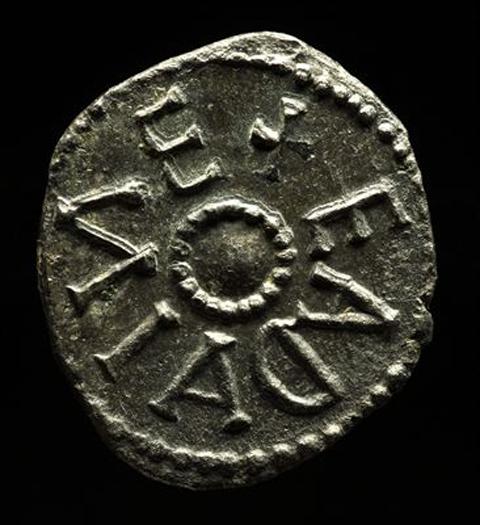
The rare Anglo-Saxon coin found at the minster shows that the city had its own mint [Credit: Maev Kennedy/Guardian]
The recent excavation of a pair of Viking feet and a tiny silver Anglo-Saxon coin may lack the glamour of the discovery of the last Plantagenet, but it has shone a light on one of the least known periods in the long history of York Minister: the centuries between the fall of Roman empire and the coming of the Vikings, in AD866.
The coin, no bigger than a 5p piece, is a sceat, minted in York. It is in such good condition that experts at the British Museum first thought it was a Victorian fake. So good is its state of repair that marks are legible identifying the maker as Eadwine, who also minted coins for the Northumbrian court. It proves that York had enough status and wealth in the early 9th century to support its own mint.
The coin is so pristine it was probably never circulated, so the archaeologists surmise that it was dropped accidentally almost as soon as it was struck, and that the mint must therefore have been very close to the site of the present enormous medieval church, which was built over layers of earlier foundations, some of them Roman.
Read the rest of this article...
Subscribe to:
Posts (Atom)